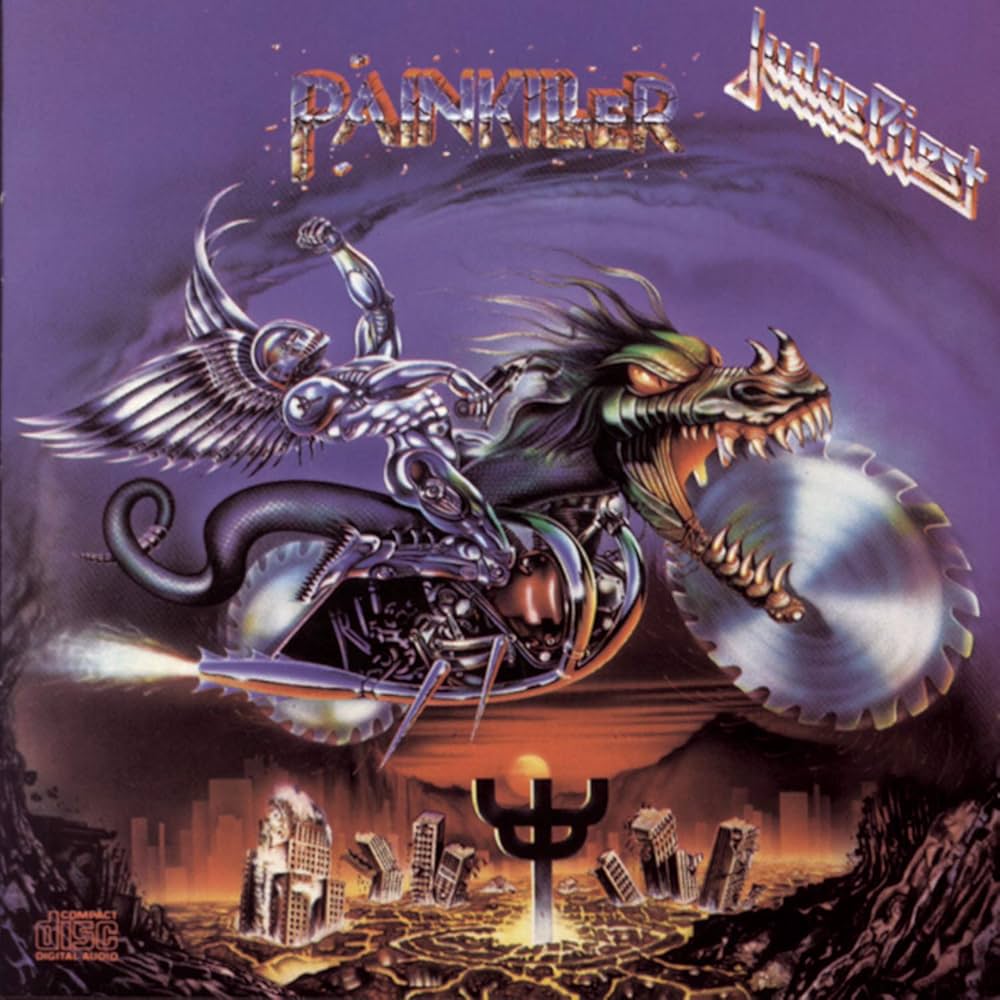
HEAVY MUSIC HISTROY: Painkiller – Judas Priest
The year is 1990, mankind is on its knees. The Grim Reaper, swapping traditional black robes for plaid, stalks the musical landscape. Scything down the pompous, hairspray indulgent, glamourous metal bands that populate the sunset strip and covet the FM airwaves. In their place, Seattle churns out stripped down angsty grunge. Disaffected youth are now enthralled by the sounds of NIRVANA, PEARL JAM and ALICE IN CHAINS. There’s something in the air; it smells like teen spirit. Much like the musical reactionary stance of punk against the bombastic over produced, over complicated sounds from twenty years earlier. Grunge now stands as the champion for the downtrodden, eschewing the allure of tight leather trousers. It’s gritty and represents a new generation. Bands must adapt or die as MTV, picking up on this zeitgeist, dedicates its airplay to the rising stars of the new sound.
However, there were stalwart bastions of heavy metal that remained. While IRON MAIDEN was in a tricky transitional period, METALLICA have become a commercialised behemoth and SABBATH are still being led by Tony Iommi, but their direction is unsure. Yet one band, like a denim and leather beacon in the turbulence are on the cusp of releasing one of their seminal albums. JUDAS PRIEST, brighter than a thousand suns deliver Painkiller.
For a band to already be twenty-one years into their career with a host of albums in their catalogue that any metal band would give their last roadie for. It speaks volumes of their songwriting calibre that they can release an album of Painkiller’s quality. Particularly at a time when traditional heavy metal is facing a fresh assault from a genre like grunge. Which has tapped into the minds of so many in such a short time. Rather than adjusting their approach to fit with the changing landscape, JUDAS PRIEST charged into the musical fray with a collection of songs that contained a blistering intensity and have since go onto become defining for the band.
Their sound on Painkiller was certainly more aggressive than previous releases, 1988s Ram it Down and the maligned 1986 Turbo. Some put this new found invigoration down to new drummer Scott Travis. Undeniable, Travis injected some venom into the rhythm section and the pace throughout Painkiller is far greater in its urgency than previous albums. However, the songs collectively sound angrier and far more driven in their purpose. Quite apart from the title track, with Halford providing full octave defying vocals. There is genuine a menace to tracks like Night Crawler and Touch of Evil that only a band firing on all cylinders could create. Likewise, Between the Hammer and The Anvil, is one of the most decisive metal tracks committed to tape. As their twelfth studio album, Painkiller is a stand out marker for the power and might of JUDAS PRIEST.
It is an album that also sounded fresh when compared to their contemporaries. AC/DC released the Razors Edge. Also, their twelfth offering. While it was vintage AC/DC it was never going to break new ground. IRON MAIDEN had No Prayer for The Dying which, while it has some solid tracks, sounds tired. Certainly, when compared to the likes of MEGADETH and their seminal record Rust In Peace. Painkiller more than held its own when listed among its peers and even gave the younger bands something to think about. It is an album that surges with power and never once shies away from what it is. An out and out metal tour de force. JUDAS PRIEST were one of the early adopters of the heavy metal mantle and were also proud to fly the flag for the genre. Painkiller is a metal mission statement to its very core.
Initially the release of the album was slated for March of 1990, however, delays saw it actually hit the shelves in September. The cause for the hold up can be attributed to the heavily publicised subliminal message trial of July 1990. With the trial eventually being dismissed and JUDAS PRIEST exonerated of any nefarious backwards messaging. The headlines generated a wave of publicity for the band. Interest was reignited globally. The album ultimately proved to be worth the weight. It was received with ravenous critical praise and the fans went wild for the record and subsequent tour. It further cemented the JUDAS PRIEST presence in the hall of heavy metal greats and has since gone on to be a defining album not just for them but the genre as a whole.
It is also an album that marked a dramatic point in PRIEST history. Following the subsequent album tour. Rob Halford departed the band. The split was not entirely acrimonious. Tensions between band members and Halford’s desire to explore other outlets with his own band Flight are largely cited. The tensions mentioned were strong enough to keep Halford and the rest of the band at a distance for the majority of the 90s. Both did well, supported by their existing fanbases. Yet it would not be until Halfords return in 2003 and the albums from then onwards that JUDAS PRIEST would once again harness the power of Painkiller. A pivotal album for a pivotal band. Painkiller has it all, from the music to the artwork. Released at a turbulent time for both the band and the genre in which they were in, it is an album that is essential for any metal fan, not just fans of JUDAS PRIEST.
Painkiller was originally released on September 17th, 1990 via Columbia.
Like JUDAS PRIEST on Facebook.