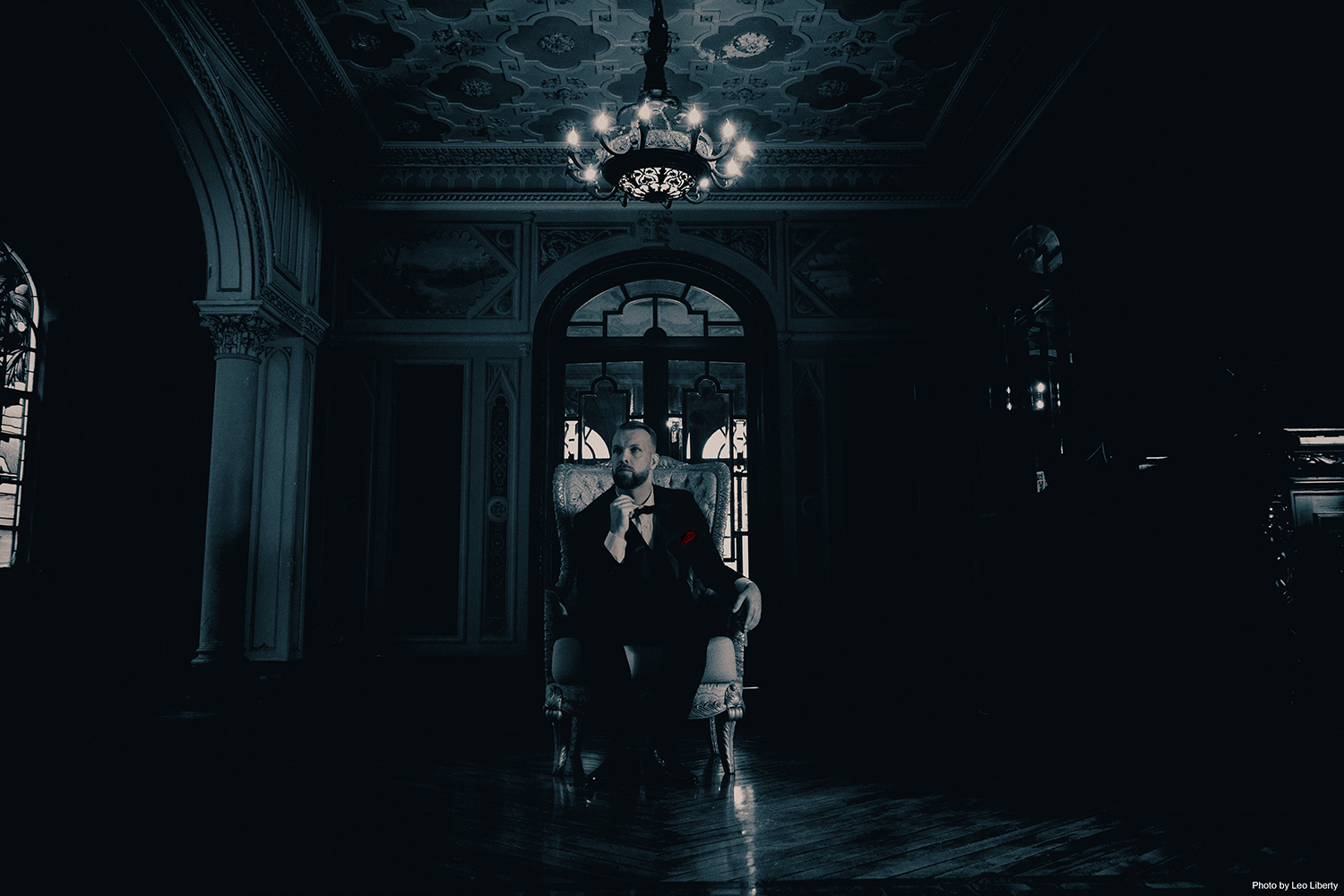
Einar Solberg: Chaos Over Structure
Einar Solberg is seeking chaos over structure. Unable to stand still, the mastermind of art-prog supremos LEPROUS knew he needed a new challenge, and allowed circumstances to conspire to set him up with one. “I approached it in the most ‘me’ way possible – I just booked an orchestra without having any music,” shares Solberg. Before he knew it, his deadline to submit the scores was looming, just as he was in the middle of a tour on the opposite side of the world. What followed was an intense period of creativity, writing in airports, backstage areas and on tour buses: “It forced me to go into places I wouldn’t have gone before, and where I am forced to write music – a situation that I love.”
Solberg is talking about the inception of his ambitious new work Vox Occulta – his second offering as a solo artist, recorded with the NORWEGIAN RADIO ORCHESTRA. From the chaos, Vox Occulta arises as a singularly focused expression of Solberg’s vision for a solo career. It all started from what he subtracted from his main band LEPROUS. “We had started adding more and more orchestral parts in the albums from Malina through to Aphelion, until eventually we had members standing on stage waiting for their turn while backing tracks played the cello or whatever.” He admits that this diluted the ingredients that make LEPROUS special – the unique synergy and groove of the musicians in the band – and the collective made a reset with 2024’s more direct work Melodies of Atonement. This also gave an answer to his search for a solo identity. “I thought, what if I put these parts into my solo project where I don’t have to feel any restrictions, and I can make it not just a layer but the foundation.”
Indeed, the new songs started life as orchestral pieces. “The album has a lot of different elements, but what is always there is the cinematic sound, every single song has some cinematic parts to it.” Einar Solberg is cognisant that these days, more than ever, an artist needs to present a clear identity. This leads him to declare that he wants to be seen as the “cinematic person in prog” as a way of becoming “more visible, but without in any way losing my artistic integrity”. A large part of the cinematic character is carried by his stunning collaboration with the NORWEGIAN RADIO ORCHESTRA – a national institution comparable to the BBC Orchestras in the UK. He says of his experience recording the orchestral parts that it was more a case of taking a step back and letting the professionals do their job. Still, he discovered instances where the metal world has an edge over the career players. “No matter how amazing classical musicians are, they struggle with the more angular rhythmical patterns” – a signature element of Solberg’s writing, seen for example on the title track which he admits confounded some of the orchestra pros who weren’t used to keeping up with metal.
The classical tradition in the album is also borne by its leitmotif of having song titles in Latin, not unlike a Baroque opus. At first Solberg self-deprecatingly quips that he did it because no one else had thought of doing it before. In reality, the titles came before any of the lyrics, purely from his reflections on what emotions the music stirred in him – or the ones he was investing in it. While the heavenly Serenitas alludes to the place of inner peace that he feels in this stage of his life, Vox Occulta (‘hidden voice’) refers to the darkest parts of his personality that sometimes make him make choices or say things he regrets. “That represents me as a person – I am both very soft, and can sometimes be very hard”.
The hardness is audible in the music as well, with Vox Occulta containing some of his most metal moments of his career so far. “Of course, LEPROUS would never have turned down the riff to Medulla,” he chuckles, referencing the djenty motif to one of his lead singles. “There is always going to be similarities because both have my DNA all over them” he reflects. Whilst he is the de-facto leader of LEPROUS, Einar Solberg pays tribute to his colleagues by admitting that he could never replicate the subtleties that only come from spending decades playing together – nor would he want to. “My solo project is more about the composition and the emotional journey I go on,” making Vox Occulta a 100% undiluted, unedited version of Einar Solberg.
Having said all this, a solo career was never a goal-in-sight, but rather another avenue for a restless creative. “It’s like food,” Einar muses. “I love to eat Indian curries, but if I eat that everyday I will get tired of it. It’s the same with music. If I just do the same thing, I get to a point where I get easily distracted and don’t feel anything anymore. So I need to constantly chase new horizons. I am an adventurous person, I seek chaos over structure and order – it’s just who I am.”
Two albums in, Einar Solberg is well past the poppadoms and chutneys for starters. “I didn’t start with ambitions for a solo career, but now I have them. My vision is that LEPROUS and my solo project co-exist together, and I have periods where I switch my main focus from one to the other.” He’s also keeping an open mind to other logical steps to explore – to the question of whether he’d consider trying his hand at scoring films or video games, Solberg laughs. “A hundred percent, but I’m not going to fight very hard for it – I’m going to let them come to me.” One thing is for sure, there would be fewer better candidates from the metal world to write a James Bond theme song. “That would be great, but even RADIOHEAD got rejected for that, you know,” he chuckles. “I’m ambitious, but also realistic.”
Vox Occulta is out now via InsideOut Music. View this interview, alongside dozens of other killer bands, in glorious print magazine fashion in DS130 here.
Like EINAR SOLBERG on Facebook.