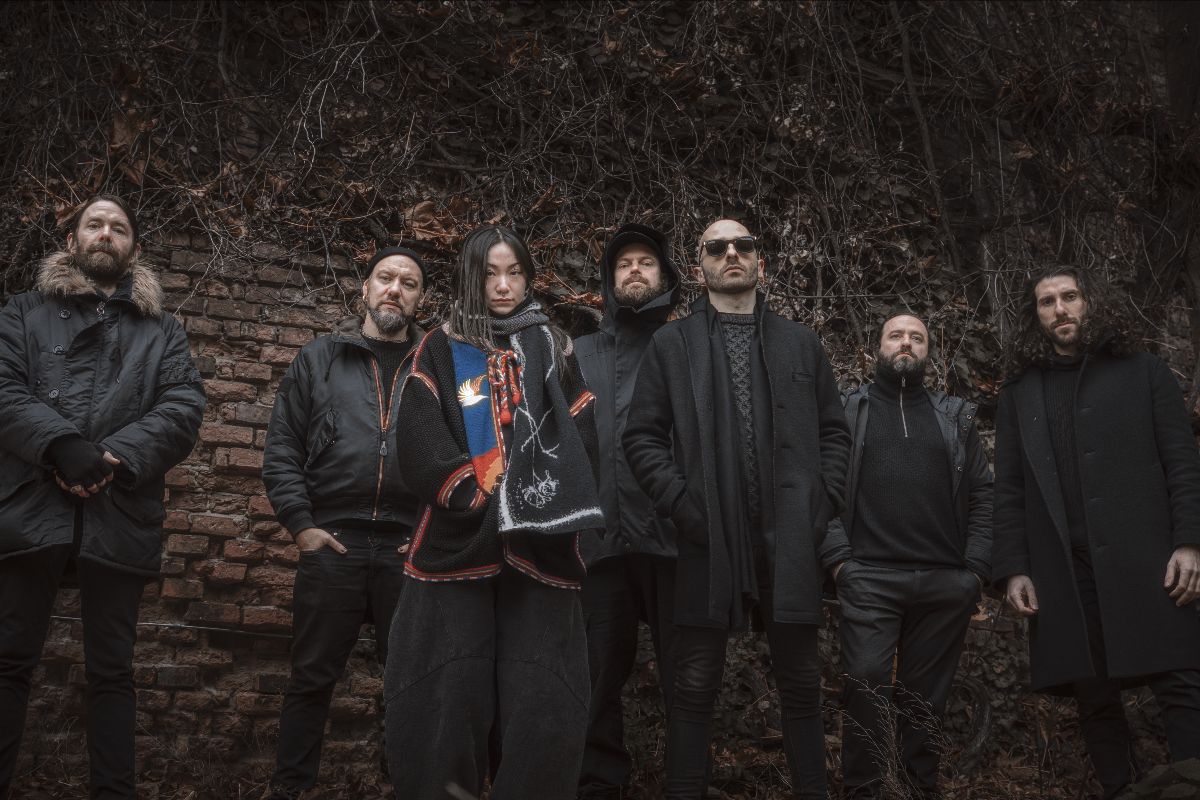
The Ocean: Making An Offer
Not many success stories begin with a band’s collapse. After a run of acclaimed records, Robin Staps, leader of THE OCEAN, found himself at the start of 2025 down a singer, a drummer, and a guitarist.
Before their departures, before even the release of 2023’s Holocene, another album had been written. The intention was for this other record to follow Phanerozoic II: Mesozoic / Cenozoic, but Staps got “carried away” by some synth ideas sent to him by Peter Voigtmann, a previous band member. Thus, 2023’s Holocene, an album that was ‘kind of an accident’.
This other album was Solaris. In a way, Solaris saved THE OCEAN. Staps says, “when the old lineup collapsed throughout 2024, I knew I had this record and I felt strongly about it. I really wanted it to be released, and in hindsight, it’s been one of the things that really helped me stay motivated to push through in light of the collapse of the previous lineup. I also asked myself the question, do I still want to continue with this band? It’s been 25 years, maybe it’s time to do something else. The answer to that for me was yes, because that album was there.”
Like the critically acclaimed Pelagial from 2016, Solaris was composed as one long continuous piece and Staps was prepared to release it as an instrumental record. No vocal ideas had been written or recorded before former singer Loïc Rossetti left. Staps was imagining THE OCEAN’s next chapter could be fully instrumental. But then he met Enrico Tiberi and Lane Shi, the band’s new co-lead vocalists, in quick succession. All of a sudden, he was excited about what they could bring to Solaris.
Over half a year, Tiberi and Shi contributed ideas to the music, reacting to and building upon what the other recorded. They were never all in the same place at the same time with Staps, and this asynchronous way of recording gave them time to reflect on what was taking shape. They discarded a lot of material, but they had the freedom to experiment too, a process that helped them discover each other as musicians.
About Shi, Staps shares, “she is very intuitive and emotional. Often, the first take she would sing would end up on the record, because she takes the energy from the moment, somehow.” Tiberi is “more of a sound architect”. He would construct complex harmonies, giving Staps options to choose from when assembling vocal lines. It just so happened Tiberi is also a classically trained pianist, something Staps only discovered later, and so he also contributed keys across the record.
On paper, a chorus like “it hasn’t really been so long since our communication has become intercontinental, with satellite phones and drones” is far too wordy and way too literal, and yet Tiberi finds a way to not only make it work, but turn it into an earworm that grounds you among the ever shifting Light Pollution, a 10-minute epic.
Solaris takes its name from the 1972 film by Andrei Tarkovsky, about a celestial body covered by an ocean that functions as an extraterrestrial sort of intelligence. It affects people by digging up memories from their childhood or confronting them with their trauma and experiences, but they are not sure if what they are seeing is real or if it is ‘appearance without resemblance’.
Staps references philosophers Baudrillard and Deleuze and postmodern theories of simulacra when tying the ideas of Solaris to the state of the world as it is today. He explains, “we deal with a lot in our communication these days, to the point where we’re not really sure if something is actually real anymore, and where all of our communication is always mediated. At the same time, everything is always visible. We’ve come to share every single aspect of our private lives, to the point where it’s questionable whether there is still any sense of privacy.”
Staps feels comfortable around the 10-minute mark when it comes to songwriting currently. Light Pollution, Belligerence, and Ultima Esperanza all clock in around that length. But then Simulacra in its entirety runs past 17 minutes. Solaris is a chunky, demanding listen. In an era of algorithms and easy skips, do listeners want challenging epics? Staps thinks so. “I’m very convinced, in this time where everything is so short-lived, people are looking for the antithesis to that. That’s why people buy vinyl instead of streaming, even though it’s more convenient. And it’s why people listen to long, bulky pieces of music. The interest in Solaris kind of confirms that. In the end, we’re making an offer. Time will tell if people appreciate that offer. But I think people want to have real art in a time when it’s endangered by AI.”
THE OCEAN is still something Staps is discovering after 25 years. As long as it feels like there is a new destination, he will keep heading there. “There are some works of art that age well, others that don’t age so well, and then there are other pieces that are timeless. You can always listen to them, and that’s very hard to achieve. I’m not sure if we have managed to achieve that yet.” The search continues.
Unlike when Holocene was released, there is no other album in the bag. Solaris was “time consuming” and the band are only just starting to discover what this new phase of THE OCEAN might look like. But Staps has found inspiration in surrounding himself with new people, even though he has no idea if this lineup will last for years or if it is just for now. With most members in their 40s, he says being able to continue making music and touring is “beautiful and nothing to be taken for granted”. He is not thinking about the future too much. All he knows is when faced with whether the band should continue after a critical collapse, the answer was yes.
Solaris is out now via Pelagic Records. View this interview, alongside dozens of other killer bands, in glorious print magazine fashion in DS133 here.
Like THE OCEAN on Facebook.