ALBUM REVIEW: Ferrum Sidereum – Zu
Some bands defy simple characterisation. Whether through continual chameleonic evolution, a determination never to meet expectations, or simply by sounding wholly unique, the “experimental” and avant-garde labels serve as a crutch for listeners and reviewers alike. Few bands truly live up to those labels the way ZU have over the past thirty years. The Italian outfit have the line-up of an instrumental jazz trio, yet have drawn on punk, noise rock, metal, ambient drone, and a dozen other styles throughout their lengthy career. ZU have often collaborated with and moulded their sound to fit other guest artists as diverse as Mike Patton, MELVINS and RUINS. Yet their latest effort, Ferrum Sidereum, breaks a seven-year wait for new music from the core trio.
That last studio album, 2019’s Terminalia Amazonia, was the third in an experimental trilogy, mostly made up of analogue synths and drones. Ferrum Sidereum heralds a welcome return to the band’s heavier, bass-driven palette. Naturally, it retains all the hallmarks of challenging avant-garde music: a runtime of over 80 minutes, song lengths that rarely dip below seven minutes and eschew typical structures, fiddly time signatures, an embrace of abrasion. Opener Charagma provides a furious assault of chugging metallic bass, baritone saxophone stabs and splashy cymbals, overlaid with high-frequency squeals, to hammer home the point.
Yet for all the intrinsic challenge, the songs themselves aren’t inaccessible. Early single Golgotha takes in a touch of Italian gothic horror with descending strings, guttural sonics, and a haunted choir, but falls into an almost conventional gear with a bouncing riff and sweeping synth strings. Its closing build and release could be mistaken for a MICK GORDON track off the Doom videogame soundtrack, albeit with a ripping saxophone line and the Doomslayer on a bunch of hallucinogens. A.I. Hive Mind finds an insidious, repeated riff on bass (and briefly on 12-string acoustic guitar), juxtaposing a machine feel against creative drumming and more saxophone blasts for a compelling assault of post-metal. Pleroma uses every second of its eight-minute runtime to drag out a tense, escalating build that earns its demonic, wig-out release.
Part of the creative appeal of ZU is in the choice of instruments, eschewing electric guitars in favour of Massimo Pupillo‘s driving, distorted bass. The broad range of tones he achieves is impressive – with TESSERACT-style bends on Charagma, pulsing power chords and delay-laden cleans on the kaleidoscopic Kether, and a metallic sound on late highlight Fuoco Saturnio that apes djent riffs without conventional gain. Atop this are the baritone sax stabs of Luca T. Mai – sometimes reinforcing the bass, at others unrecognisable through a mountain of signal processing, as on La Donna Vestita Di Sole. And of course, sometimes squealing atonally across intense breakdowns. The musicianship is excellent, highly capable rather than virtuoso, though the creativity of Paolo Mongardi‘s drumming deserves a hat-tip.
What sets Ferrum Sidereum apart from its peers is the bold swings in production and electronics. In the hands of another band, the aforementioned Fuoco Saturnio might sound like any other instrumental metal or djent song, but its sparse mix gives a weirder, impressive feel. A.I. Hive Mind escalates through adding layers of distortion and saturation to the master, augmented by digital staccato, capturing a descent into cyber madness. Most tracks find room for hard stereo pans and mind-bending phaser effects alongside the unorthodox electronics work delivered by Mai when not on saxophone duty. The intertwining bass and lower-register saxophone never result in a muddy sound either: the mix from producer Marc Urselli deftly handles the sonic density.
For all the impressive components and construction, however, this is still an exhausting effort. Despite the vast well of influences behind ZU, much of the writing on Ferrum Sidereum shares DNA with modern post-metal and djent with a touch of TOOL, and its abrasive approach, combined with that consistent base, starts to overwhelm before the halfway point. Even the quieter moments find themselves laden with menace, such as the early stages of Pleroma, or the softer arpeggiations that open Fuoco Saturnio. Many listeners may have run out of stamina or patience before the closing title track, which features more mind-bending saxophone over machine-gun bass and kick drum, making it the album’s most challenging work.
As with all avant-garde metal, Ferrum Sidereum is not an easy listen, both in its length and in the music itself. This doesn’t prevent it from being a highly accomplished work. ZU have crafted a bold and forceful album, a refreshing take on modern instrumental metal that is at once recognisable yet unique. Heavy music fans, experimental-leaning or otherwise, will likely find something to enjoy here. Though perhaps not taken too seriously, or in a single hit.
Rating: 7/10
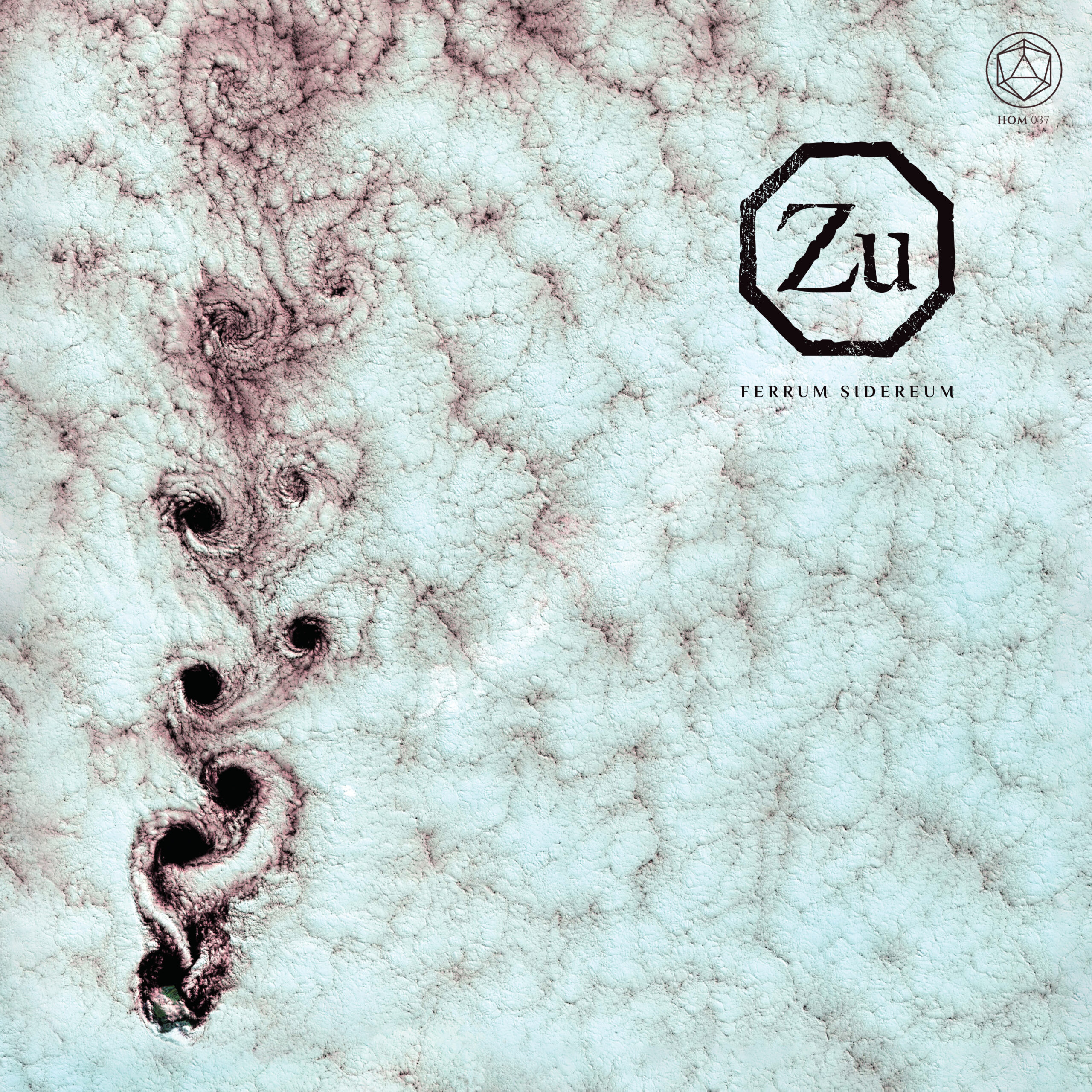
Ferrum Sidereum is set for release on January 9th via House Of Mythology.
Like ZU on Facebook.