HEAVY MUSIC HISTORY: The Art Of Drowning – AFI
There’s a striking difference between the AFI that originally emerged from California’s hardcore punk scene, and the band they would eventually become. Their career has been marked by a continuous evolution and their earliest material was a far cry from the Goth-tinged arena punk that established them as megastars. AFI are a classic example of what happens when a band are left to develop under their own steam, and it’s led to some frankly stunning albums. One of the undisputed highlights of their lengthy discography is 2000’s The Art Of Drowning.
Released on September 26th by Nitro Records, it was arguably the moment they fully became AFI. The wintery artwork and the CD inlay’s spooky cartoons were the first sign that they’d left the bratty punk songs about skateboarding teenagers behind, and the music itself was astonishing. From the ominous introduction of Initiation to the melancholy closing ballad Morningstar, it was rich in atmosphere and could only be more Halloween-coded if Patchwork Sally turned up.
They’d not abandoned the energy of their earlier material either, if anything they’d increased it. The likes of The Lost Souls, Of Greetings And Goodbyes, and Sacrifice Theory were hyperactive and anthemic, the type of punk that made you wish you could pull off better axe kicks and set a generation of young fans leaping about their bedrooms with reckless abandon. While they might have resisted the ‘Goth’ label, it was impossible to ignore that their music had matured and grown darker in a remarkably short time.
The first signs of the change were evident on 1997’s Shut Your Mouth And Open Your Eyes, but their development into undisputed horror punk leaders began with the arrival of Jade Puget. He replaced previous guitarist Mark Stopholese and brought an increased appreciation for melody with him. Puget and singer Davey Havok shared a love of bands like THE CURE and JOY DIVISION, and this showed in the songs. 1999’s Black Sails In The Sunset was a major turning point and for many fans, it was the band’s first classic. While Black Sails was good though, the follow-up blew it out the water.
After the brief taster of the four-track All Hallow’s EP, they entered the studio in June 2000 and managed to capture lightning in a bottle for the second time in a row. The Art Of Drowning took the ideas they’d explored on Black Sails, but improved on almost every aspect. The choruses were bigger, the guitar parts catchier, and the melodrama was dialled up to previously unexplored levels. The grit and fury were still there, but there was also a sense of the cinematic and the grandiose. The Art Of Drowning is an album that could be played in packed stadiums or dingy, sweatbox clubs and sound equally at home in both.
The critical response was almost unanimously positive. Alternative Press gave it a perfect score, Rock Sound included it in their 101 Modern Classics List at number 40, and it was the first to chart on the billboard top 200. To support it, the band headed out on The Warped Tour and opened for THE OFFSPRING on their Conspiracy Of One arena tour. They were briefly stranded in Japan following the September 11th terror attacks, but they soon regained their momentum when the world opened up again.
A key part of this success was the music video for their Days Of The Phoenix single. It’s a relatively straightforward performance piece, with the band playing to a lively crowd in a small Santa Monica venue, but it’s an effective one. For many rock fans, it introduced them to Havok’s distinctive look; a slender, black-clad and pale skinned figure, he’s a far cry from the mohawks, denim and safety pins aesthetic traditionally associated with punk. It also includes a memorable moment where three different versions of him read the lyrics to one another in a cramped corridor. It’s an oddly unsettling and alien visual, Havok’s off-kilter body language making him resemble the human equivalent of a stop-motion animated figure. The song and video received extensive pushes from music TV and radio stations, and it’s been a live favourite ever since.
However, while The Art Of Drowning undoubtedly boosted awareness of the band and increased their audience, it wasn’t their true mainstream breakthrough. That would come three years later, when the eagerly awaited follow-up Sing The Sorrow came out. By that point, the band were (sort of) on a major label, and the album benefitted from a much bigger budget, thanks to the deep pockets of new home Dreamworks. It went Platinum in the US and Canada and has been cited as a key inspiration on the mainstream emo movement that arrived in its wake. AFI laid the groundwork, and bands like MY CHEMICAL ROMANCE built careers on it.
But make no mistake; Sing The Sorrow is fantastic, but the world was playing catch up. The kids who spent the Autumn of 2000 playing The Art Of Drowning on repeat and getting cartoon phoenixes tattooed on their forearms already knew how good AFI were. Their fifth album was the turning point, and its major label successor was the validation.
Since then, AFI have continued to develop as artists and sound even further removed from their teenage selves today. 2006’s Decemberunderground was another commercial success but saw them taking sizeable steps away from punk and turned some of their audience away, while recent years have seen them turn all but abandon their roots. However, their creative spark is still burning and even if the thought of listening to 2021’s Bodies is enough to make your stomach turn, The Art Of Drowning has lost none of its atmospheric splendour. We remain in shadows growing wings.
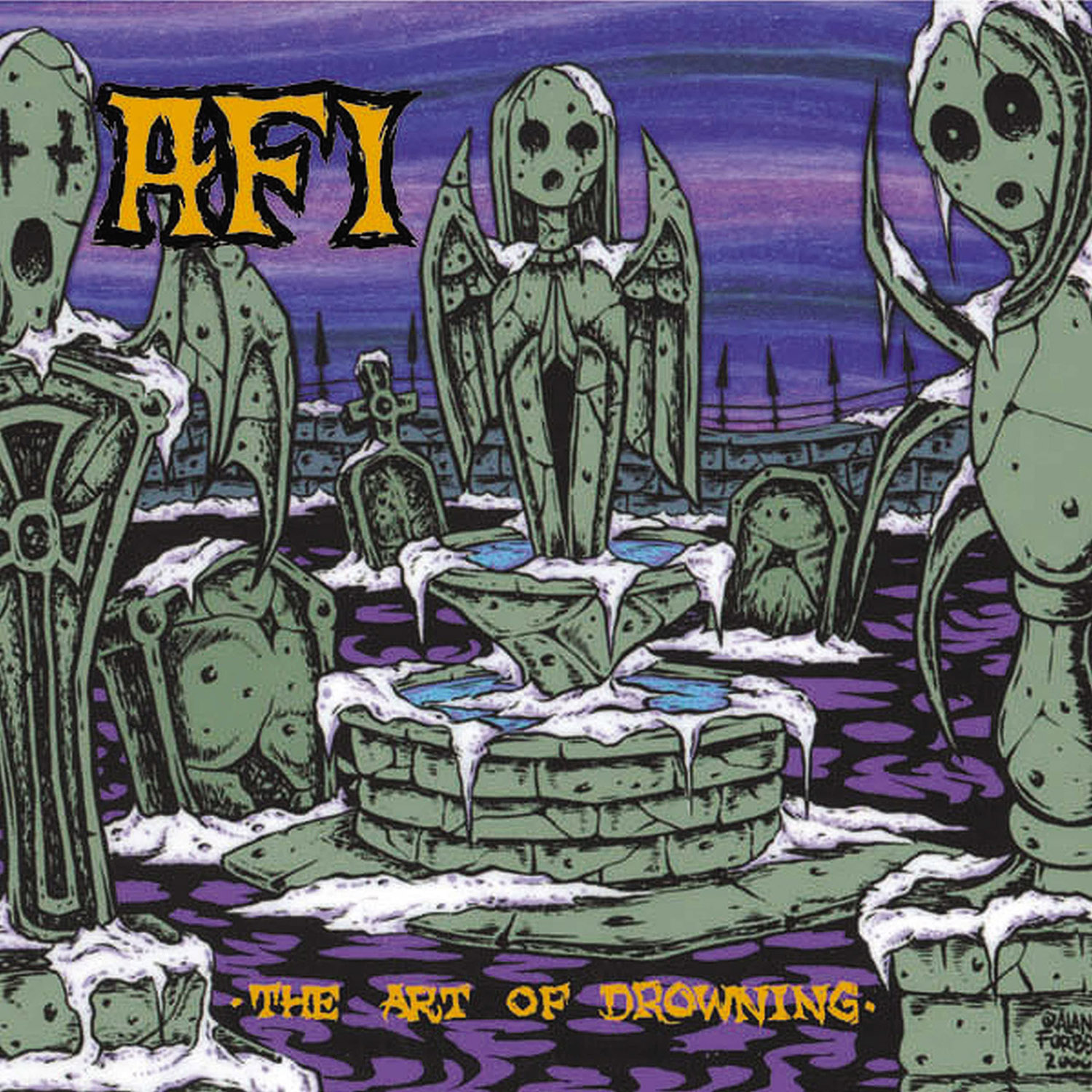
The Art of Drowning was originally released on September 26th, 2000 via Nitro Records.
Like AFI on Facebook.