Cold In Berlin: The Wounds That Connect Us
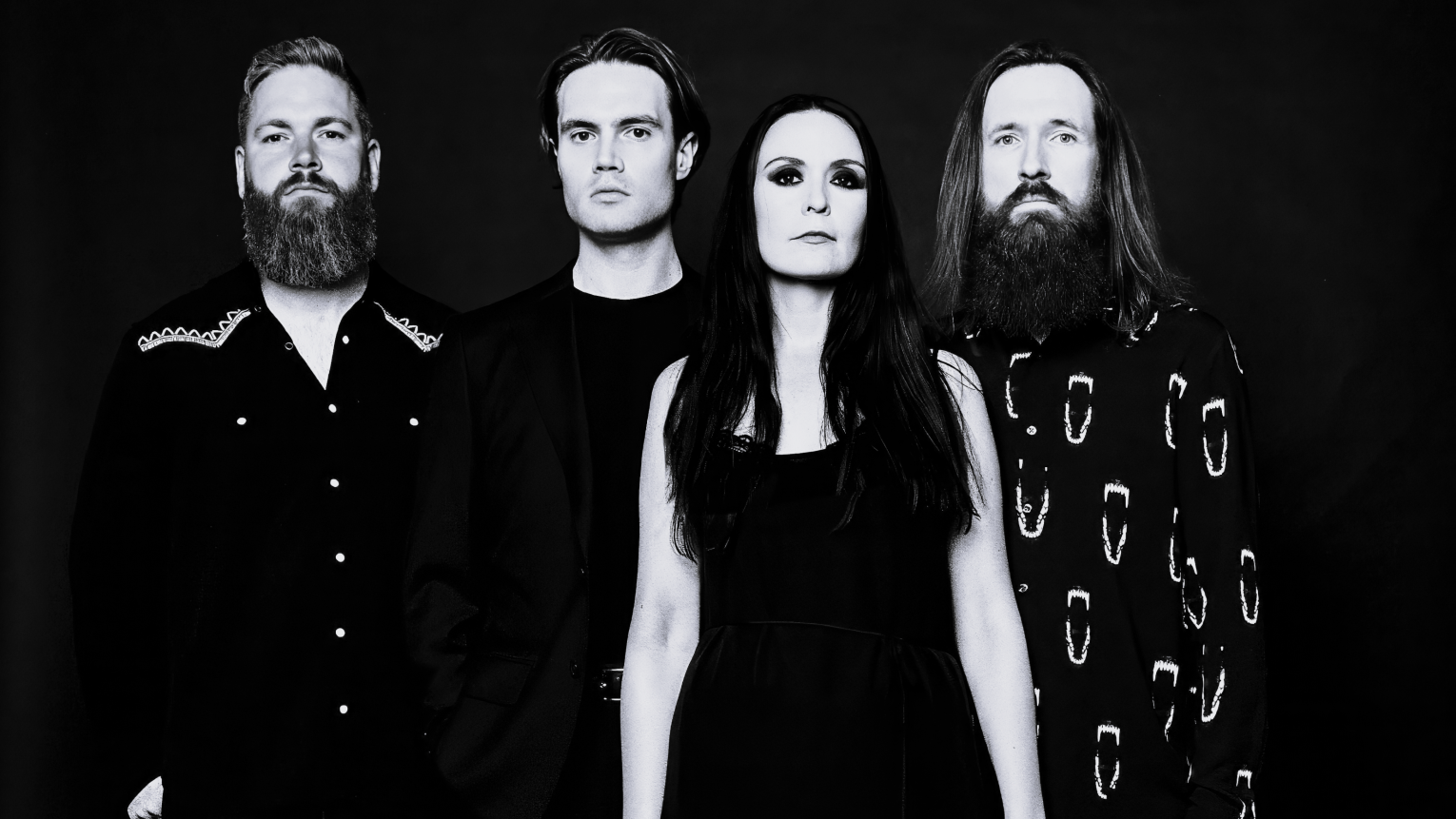
Bands find themselves on a spectrum when it comes to changing their sound over time. On one side, you have bands that stick with a clear genre or aesthetic for an entire career. On the other are bands that seek to redefine themselves, continually adapting and evolving throughout their lifetimes. It’s safe to say that COLD IN BERLIN tend to the latter side. The East London alternative four-piece may have begun in post-punk territory, but over four albums in the ‘10s, they have taken on a darker intensity closer to doom. The band broke a pandemic-induced pause last year with The Body Is The Wound, an EP that once again sought to reinvent, pushing synth sounds to the fore alongside the abrasive yet melodic intensity of their songs.
Hot on its heels is their fifth album Wounds – doubling down on the themes of that EP alongside the prominence of synths, prompting some comparisons to krautrock alongside the other labels. It’s another left turn for a band that does well on goth and doom metal bills alike, without ever neatly fitting those labels. “I think that’s what people find interesting about us,” says frontwoman Maya Berlin. “We like to play around the edges of genres.” Guitarist Adam Richardson concurs. “We just write what we write. And over the years, we’ve acquired quite a few genre tags!”
That’s not to say that COLD IN BERLIN lack consistent signature elements to their sound. Berlin’s arresting vocals sit across their songs, filled with interesting lyrical characters and tales, a siren call amidst the intensity of the instrumentation in whatever shape that may take. Richardson lands on the word “stark” as a fitting summary. “Our music and Maya‘s lyrics can be quite direct. She leaves enough mystery for interpretation of the lyrics, but I think our approach is direct, stark, black and white, night and day.” Darkness is also a common theme, states Berlin, referring to the lyrical themes and acceptance in goth circles, though she’s keen to reinforce the importance of hooks to the band as well. “Essentially, I think the songs that we write that people really like are really pop songs. Great songs, verses, great choruses. They just happen to be heavy.”
The plan was to create a trilogy of EPs, both to experiment and to reconnect as a group after a pandemic-induced pause. Instead, the band found their writing process came very naturally (“We just wrote an album!” jokes Richardson), and went all-in on Wounds. The album format matched well with Berlin’s thematic ambitions. “I really wanted to write an album that expressed the wounds that we carry, and I really wanted to do that from a female perspective. And have strong female characters in the songs.”
That feminist perspective is a hallmark of the album, evident in the ghostly revenge tale of Hangman’s Daughter and in the powerful love story of They Rain. “I try and write lyrics that reflect the complexity of being a woman in a world where you want to be everything,” says Berlin. “Whatever your identity, we carry that kind of formative pain with us.” She cites the importance of connections forged through the commonalities of painful life experiences – the titular wounds – as the binding aspect of the album. “Everyone has connected with it, some kind of lost love, some kind of loss, grief, sadness. But we’ve also experienced the strength that comes from that, and I think also the connections that you can make with people that have been through similar things.”
The music may have a dark twist to it, but it’s powered by those lyrical themes, which reflect the universal as much as the personal. “It’s not the world that I think we thought it was going to be 20 years ago… It’s just as dark, and scary, and disappointing,” laments Berlin. Yet Wounds is not meant as a lament of despair, nor does it sound as such. “There is hope in the album, I think. It’s not an album that is just about survival and scratching through. It’s about finding each other, standing up, and dancing, as always! And finding the joy in the moments that are joyful, and being able to name them. Hopefully that comes through.”
COLD IN BERLIN decamped to rural Wales to record Wounds – a first for the band, and an experience both Berlin and Richardson loved. Part of the motivation was for a setting that matched the intensity of the band’s style – and to really set this album apart as something new. “Maybe I just wanted us to have a bit more time together and just make sure that we gave it the space, because it was, it is quite a different album for us,” reflects Berlin.
Richardson also praises their collaboration with producer Mike Bew and with BOW CHURCH, who took bassist Lawrence Wakefield’s synth lines and added some icy flair to the sound design. “He was really up for doing that, and did a great job,” says Richardson. “It’s just another wonderful frequency element… It’s not an extra instrument for the sake of it.” The synth lines form an integral part of several songs on the album, and present a challenge for the live act, though one that the band are confident in addressing. “We didn’t want to go the full step of having a synth player on stage… We’re just practising!”
Wounds stands as the latest evolution of the COLD IN BERLIN sound, an album the band are rightly proud of. Reflecting on it and the band’s development, Berlin continues to return to the theme of connection as critical to her and their work. “The more I’ve talked about the album, the more I’ve realised that [connections] is what music is for me, and I think that that is probably what alternative music is to lots of people.” Whether in starkness, darkness or intensity, there is something for all alternative music fans to connect with in COLD IN BERLIN.
Wounds is out now via New Heavy Sounds. View this interview, alongside dozens of other killer bands, in glorious print magazine fashion in DS126 here:
Like COLD IN BERLIN on Facebook.