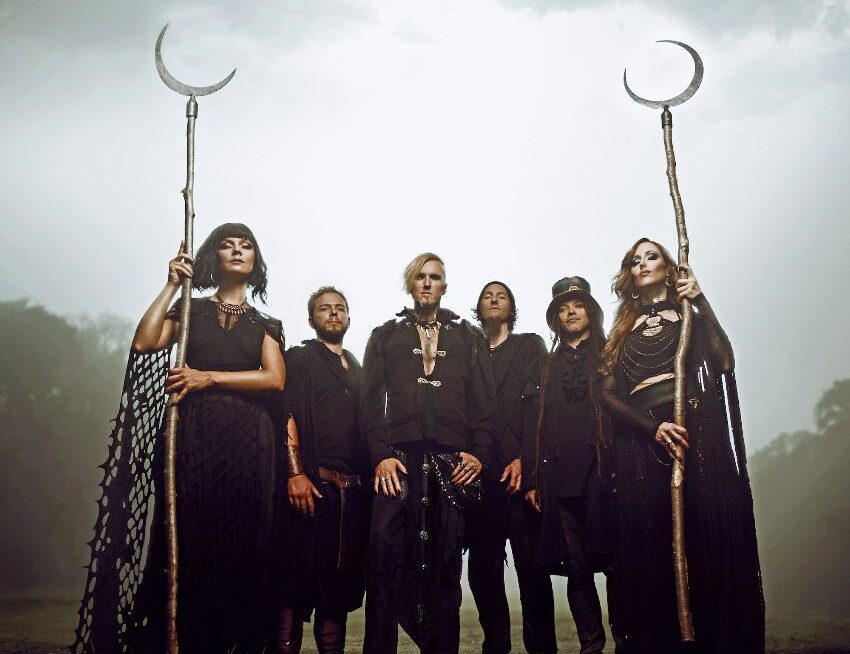
Faun: A Discovery Of Witches
When it comes to inspiration for songwriting, some artists will look toward their own personal lives, others might take a broader approach and look at topics facing the world as we know it today. And then some take it a little further and consider broader topics, looking into a deeper historical context and themes surrounding it. FAUN falls into this category.
Hailing from Germany, the six piece have spent the last three decades carefully tailoring and putting together their own version of contemporary folk rock, which has been dubbed as ‘Pagan Folk’, with combination of modern and Medieval instruments to create something atmospheric. At this point in time of our conversation, they are about to put out their twelfth studio record Hex which explores the topic of witchcraft, more specifically on feminine magic and women who were healers, alchemists, seers, and more. The main idea being to give an accurate telling of who these women were, the good intentions behind these practices, and, the most important part, questioning why it was that people were told to fear them rather than ones who would hunt them down to burn at the stake.
We sat down with founding member, Oliver Satyr, to discuss the creation of the record and the main topics explored in the lyrics across each song. FAUN have become known for their ability to bring together Medieval instruments with modern industrial sounds that give their music an atmospheric edge, perfectly capturing the emotions and nature of each story told that make each song hauntingly beautiful.
When asked about how they went about creating Hex, Oliver summarises it as something that came along very naturally. “We didn’t have a master plan, but I think in the end it became our darkest album. So, because it’s very dark sometimes, very mystic, and I think it depends on the song and the sources we found. Sometimes you cannot make happy music if it’s a really serious topic. We’ve always had the mix of old instruments and electronic music to give the right atmosphere.”
“But sometimes we just let the songs write themselves, so I’m not sure if this is always good, but we felt like this is the way it wants to go and we’re so happy to not have a label anymore, to have our own label and the total artistic freedom, and so we follow the intuition. Then, for example, the first song (Belladonna) starts off with a Cumbia beat from Latin America, then it goes into the Irish folk song, then it has reggae elements, and in the end it goes into rock. So, I think that’s everything else that the commercial single, but still we have a feeling this is how the song wants to sound in the end.”
Medieval instruments have been used since the very start of FAUN’s formation back in 1998, a choice that felt perfect for Satyr thanks to their ability to elevate songs into something more incredible, as he puts it. “I think for me there’s some instruments that have this special sound, this magical sound. For example, I am the lute player in the band, so I have different lutes, but I also do the key fiddle, which is a mostly Swedish instrument with wooden keys, and you bow it, and this is a very rough sound. This has a very like earthy sound.”
“For me it’s my main instrument because we tell ballads and sometimes a ballad, ones about like earthy sounds, more mysterious sounds, such an instrument is good. Sometimes it becomes more romantic, then we have the Celtic harp, so it’s nice to have the variation in the band. And I’m with this different lutes and key fiddles. I have more than enough to learn for the rest of my life. For many lives actually.”
Hex isn’t the first time that FAUN have explored the topic of Paganism and witchcraft with their previous album, the aptly titled Pagan, focused heavily on the practice throughout history in different cultures. Yet in doing so, they found themselves looking into the history of witchcraft that they weren’t as familiar with, so ahead of writing for Hex they delved deeper and researched many famous women affiliated with the practice, including the likes of Nimue and Hecate, with each song exploring a different corner of history and culture.
According to Oliver, this is something he was already fascinated with. “I love this kind of material. For example, there was a lot of Paganism in these old Celtic sources I was really at home with, but witchcraft wasn’t a familiar topic, so I was really happy to dive deeper into there. Also, since I for example, when I did the research for Pagan, I met amazing people like, for example, Vivianne Crowley, she’s a really great author and witch, and a professor for witchcraft from the UK. And these people were huge inspiration, so I thought I want to dive deeper into it and that’s really nice.”
And more than anything, FAUN have encouraged people to do their own research with Satyr revealing that Hex comes with a 60 page e-book that cites resources about Paganism and witchcraft. “We have a normal CD with a vinyl, but we also always decide that for people who want to dive deep into the aspect, we have an e-book, and for Hex this is like 60 pages and with a lot of text about explaining the songs, explaining the origins, because very often people come to us after concerts like, ‘Wow, this is so interesting,’ and talking, for example, about the garden of Hecate.”
“But then we say, ‘well, we are storytellers, we are musicians, but if you want to dive deep into topic and maybe want to make your own experiences, then you need different persons like different sources, teachers, witches, shamans, whatever,’ and it’s really nice on these books to work together with them, for the people who want to dive deeper. They can read the book and also get sources where they can connect to people who, if they really want to, get into practise for example.”
Hex is out now via Pagan Folk Records. View this interview, alongside dozens of other killer bands, in glorious print magazine fashion in DS125 here:
Like FAUN on Facebook.