Uuhai: Connection Beyond Borders
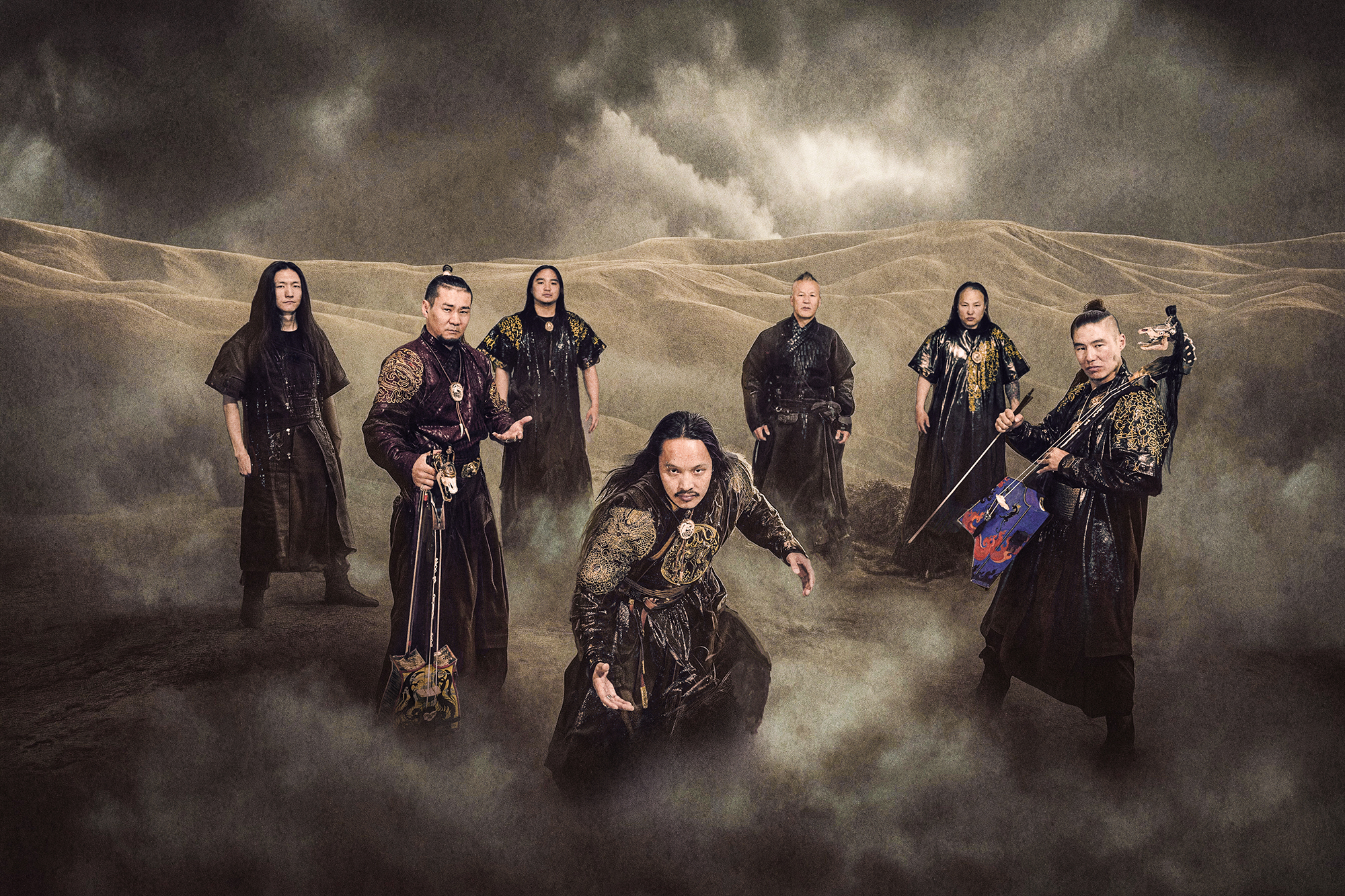
Mongolian folk metal is the gift that keeps on giving. When global phenomenon THE HU burst out of Mongolia over eight years ago, they gave metal fans across the world a taste for Morin Khuur solos, throat singing and songs that take you galloping across the Mongolian Steppe with a herd of wild horses. While THE HU may have lit the spark of curiosity and slammed open the floodgates, bands like HURD, HARANGA, and NISVANIS had been laying the groundwork for decades prior, inspiring younger musicians and proving that heavy music could grow with a Mongolian identity rather than by copying foreign models. Enter UUHAI: a seven-piece rock and folk metal group from Ulaanbaatar that was formed in 2020 by Otgonbaatar Damba (Ombo), the drummer for HURD, who not only helped lay the groundwork but are often considered to be the first band to introduce heavy metal into Mongolia’s music landscape.
“The dream with HURD was to grow and strengthen the foundations of metal within Mongolia. The dream with UUHAI is connection beyond borders and across cultures,” Ombo says. “We think Mongolian folk metal resonates globally because it feels honest and rooted. Metal listeners value authenticity, and Mongolian music comes from a living tradition rather than from imitation. The sounds, rhythms, and vocal techniques are deeply connected to a real place, a real history, and a real way of life. It reminds people that metal is not bound to one culture or region; it is a global language that becomes stronger when different traditions are allowed to speak in their own voice.”
From its deep-rooted authenticity to the sonorous, captivating qualities of its instruments, one might almost say traditional Mongolian music was destined to be combined with heavy metal. “We do not see it as destiny in a dramatic sense,” Ombo comments. “We see it as something that makes sense because both traditions share the same spirit of truth and intensity. Heavy metal is about raw energy and confronting reality without decoration. Traditional Mongolian music does the same, but through ancient forms shaped by nature and daily life. Both come from a place of real human experience and connection to struggle and survival. They speak the same emotional language.”
The growling quality of Mongolian throat singing makes it the perfect vessel for telling stories to a wider metal audience, despite being impressively different to the harsh vocals usually found across metal genres. “The biggest difference is intention,” Ombo says. “Throat singing is closely connected to meditation, nature, and inner focus. It asks the singer to calm the body and guide the sound out gently. Whereas harsh vocals ask for release and outward power, requiring more physical stamina. We see them as different paths rather than a competition, and together they allow us to express a wider emotional range.”
The band’s name itself is an ancient Mongolian cry, “uuhai”, used to gather strength, courage, and good fortune. “It was never meant to be shouted alone,” Ombo says. “Its power comes from many voices rising together with the same intention.” It can be generally translated to “hoorah” in English, and adds a boisterous, almost overwhelmingly optimistic quality to the band, whose signature live show move is to get the crowd chanting “uuhai” as often and as loudly as they can. “The greatest ‘uuhai’ moment for us so far has been realising that our voice is truly reaching listeners around the world,” Ombo says. “One of the biggest highlights was releasing our debut album Human Herds with Napalm Records last month. It marked a milestone where our vision, culture, and message stepped confidently onto the global stage.”
UUHAI have played at Bloodstock in the UK, Hellfest in France, and Poland Rock Festival, and most recently, touring across Europe with the Italian comedy metal band NANOWAR OF STEEL – a combination of chaotic entertainers and enchanting storytellers that works surprisingly well. “Touring with NANOWAR OF STEEL has shown us that seriousness and humour are not opposites,” Ombo says. “They complement each other. Their comedy opens people up, relaxes the room, and creates space. And while our message may seem serious, there is celebration, playfulness, and shared energy in our music as well, especially in live settings. Chanting and feeling rhythm together, and laughing through connection, are all part of the experience. The joy is simply expressed in a different way.
“Growing up, rock and metal were an important part of our lives,” Ombo says. “That music gave us energy, intensity, and a way to express modern emotions. It showed us how sound can be powerful, direct, and honest. Rather than copying specific artists, we were inspired by the attitude of rock and metal, its freedom and its ability to speak openly about reality. Live music itself has been one of our strongest influences, feeling how sound moves people in a shared space and how rhythm and voice can unite a crowd has shaped how we write and perform. But our influences are a balance between modern expression and ancient tradition. From a young age, Mongolians learn that the land is not something to control, but something to respect. The wide steppe, the sky, the changing seasons, and the silence all shape how people think and live. Before written music, sound was shaped by nature itself. Wind, water, animal calls, and human breath became music. Throat singing, long song traditions, and ritual chants were born from that way of living, and they still carry that spirit today.”
Human Herds is out now via Napalm Records. View this interview, alongside dozens of other killer bands, in glorious print magazine fashion in DS127 here:
Like UUHAI on Facebook.