HEAVY MUSIC HISTORY: Motörhead
“If we moved in next door, your lawn would die”. Whether or not the exact quote is apocryphal, it is attributed to MOTÖRHEAD frontman Lemmy Kilmister when asked about his fledging band. Now, five decades on from their founding, MOTÖRHEAD are heralded as heroes rather than a threat to suburban garden care. From their inception, there was a deeply rooted sense of authenticity that appealed to swathes of disaffected youth.
Neither identifying with the brash punk sound and style of the seventies “…No one is gobbing on me” as Lemmy quipped in one interview when addressing punk. Nor feeling at home with the burgeoning metal scene that would soon evolve into NWOBHM. Outcasts and renegades, they built a following that was entirely their own. From nearly falling after years of hard graft and taking a final roll of the dice at the Marquee, to becoming household names after a memorable appearance on the Young Ones. MOTÖRHEAD became a by-word for stalwart dedication to rock n roll. How did we get here though. How did a speed freak bassist unceremoniously kicked out of psychedelic space rockers HAWKWIND go onto to cultivate a band that would be held in such high esteem half a century later. This is the story of MOTÖRHEAD and it’s a wild ride.
Still reeling from the sting of his HAWKWIND departure and wanting to kick back at a set up that had brought its fair share of issues. Lemmy, as he was already known by his nickname, wanted to name his new project BASTARD. Something to get up people’s noses. The story goes that with a name like this it would be difficult to publicly market and impossible to get airtime on the music flagship shows of radio and television. So, taking inspiration from other sources, Lemmy picked on the title he had penned for HAWKWIND as a B side to King’s of Speed. It’s also the American slang for a speed freak. As a self-confessed fan of amphetamines, this ticked a lot of boxes. MOTÖRHEAD had its name.
A name and an idea. The plan, to strip away any pretences and deliver a sound of straight forward rock n roll. At its core HAWKWIND was a trio of musicians, bass, guitar and drums. Lemmy understood this and that was the source he wanted to tap into. With the addition of a gratuitous umlaut, to as Lemmy is quoted as saying in the Joel McIver book Overkill The Untold Story of MOTÖRHEAD (2011, Omnibus Press), “It’s there to make it look mean”. Still broke but with a goal in mind and a name that would come to epitomise rock rebellion the planets were aligning. Like minded individuals, former PINK FAIRIES guitarist Larry Wallis and Lucas Fox on drums formed the trio with Lemmy for the first line-up. Billed as Lemmy’s MOTÖRHEAD, the new band took to the road. Shows were shaky with covers making up the majority of the set, however, headlines were being generated and a support slot for BLUE ÖYSTER CULT at the Hammersmith Odeon (one day soon to be the spiritual home of MOTÖRHEAD) helped push them further. Even if the task to become a band to rival HAWKWIND and revolt against everything that the establishment stood for seemed a mammoth task. These early shows did highlight the strength of determination and attitude that would become synonymous with MOTÖRHEAD.
The initial formation of Willis, Fox and Lemmy was short-lived. MOTÖRHEAD, for it was becoming its own entity albeit an extension of Lemmy, demanded one hundred percent commitment. No half measures would be accepted, Fox and Wallis could not keep up. Hearing that there was a soon to be position for a drummer, Phil Taylor insisted he would be the man for the job. Auditioning on the drums available, which he took as a sign that Fox was no longer interested in the position. He proved himself worthy in terms of ability and importantly at this stage, attitude. Taylor was in and was sufficiently capable to rerecord some of the drum parts on the record MOTÖRHEAD were working on. To expand the sound Lemmy wanted to try out a second guitarist. Taylor put in a word for Eddie Clarke. Clarke arriving for rehearsal, intending to play alongside Wallis, found himself the only guitarist in attendance with the latter seemingly not enamoured with sharing the role.
‘Fast’ Eddie Clarke, Phil ‘Philthy Animal’ Taylor and Lemmy Kilmister. The three amigos and to many the classic MOTÖRHEAD lineup. Had ‘It’. The attitude the tenacity and the musical talent that Lemmy had been hankering for. For a band that was born on the road with relentless touring, they had a bond and individual strength to be able to deliver on stage night after night while building a wild living reputation. MOTÖRHEAD now had a image too. Artist Joe Petango designed the snaggle-toothed Warpig that would not only feature on every album, but would adorn all manner of paraphernalia from desk pens to dildos. In 1976 though, that was far in the future. And as Lemmy would later lament in the 2005 Channel 4 documentary Live Fast, Die Old, “…I just wish everyone who had a t-shirt bought an album”.
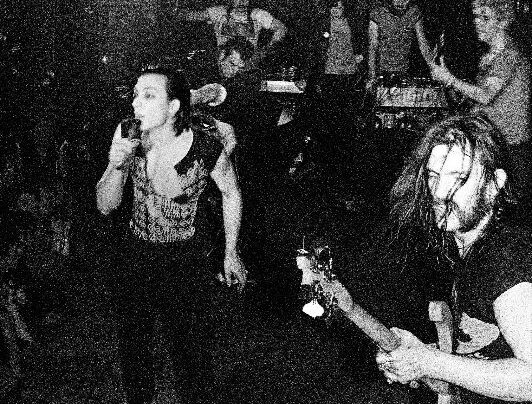
The three amigos line-up were responsible for creating a three-album run of exceptional quality. 1979 saw a double bill of Overkill followed by Bomber. Both of which contained tracks that would be in the set-lists for the remainder of the band’s life. The third album Ace of Spades would be the catalyst to turn MOTÖRHEAD into household names. The title track would go on to be on classic rock compilations forever more. It would become an anthem for teenagers in both real life and in movies when films sought to promote a character as a delinquent. The world at their feet and the shows now becoming the stuff of legend. The loudest band on earth would literally bring the roof down in some venues and fans flocked to see this now powerhouse band. It didn’t take long for the mythos to build and their antics became the stuff of legend. To capture this energy, a live album was commissioned. 1981’s No Sleep ‘Til Hammersmith was the result. Not only did this record perfectly encapsulate the frenetic energy of a MOTÖRHEAD show, it also propelled them to number one in the charts. Dizzying heights, it seemed the party couldn’t end.
It might sound strange but MOTÖRHEAD had, in the space of six years, forged a lasting legacy. Formed in the crucible of live shows and staying true to their ethos. A cult like status had built around them and the shifting musical landscape featuring the rise of heavy metal was now name checking MOTÖRHEAD as a major influence. Yet every high must have a low and 1982’s Iron Fist marked a downshift in the runaway train ride. Fractures in the trio came to a head and Clarke, having produced the album, departed. Never again would MOTÖRHEAD reach the commercial highs that the three amigos forged, but while the Warpig was wounded, it was not out.
The prolific creative output of MOTÖRHEAD is testament to their dogged determination. The proceeding years saw them write and release albums that for any other band would be jewels in their respective crowns. Yet, the earlier magic was tricky to recapture. Another Perfect Day featuring THIN LIZZY guitarist Brian Robertson was unfairly overlooked by critics and fans were less than enthused with the new guitarists approach to the classic material as well as his questionable wardrobe choices. The latter certainly irked Lemmy and Robertson soon departed. So too did Phil Taylor. MOTÖRHEAD was back to a one-man operation and a doldrum period settled in. Albums were still being written and recorded, a new image of Lemmy, Phil Campbell and Michael Richard Burston (affectionally known as Würzel) on guitars and drummer Pete Gill.
A formidable four piece and again the material, notably Orgasmatron, were solid but not enough to regain the heights of previous. This line-up also recorded several new tracks for the compilation No Remorse, one of which, Killed By Death would go on to become a MOTÖRHEAD signature. Prior to Gill joining a contractual obligation led to Taylor remaining on the drums with the twin guitar approach for a feature on anarchic comedy The Young Ones. Once again household names playing Ace of Spades, MOTÖRHEAD further cemented their impression on the British psyche.
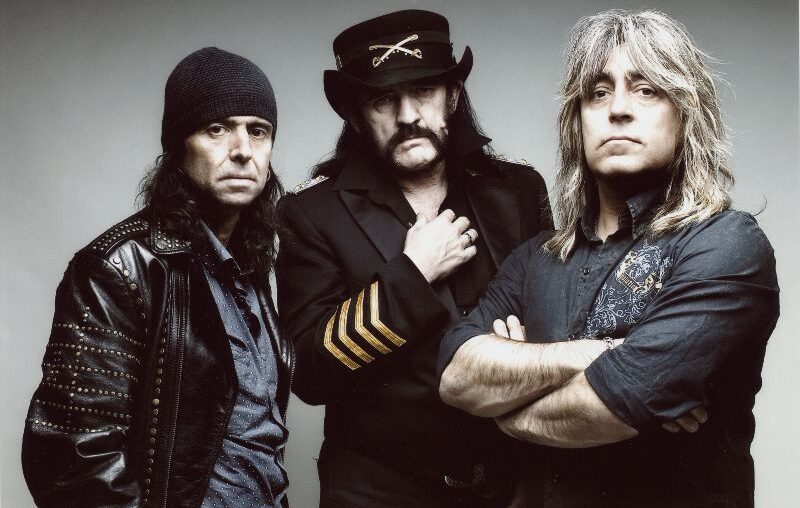
Lineup changes continued to be a thorn in the side. Pete Gill did not quite fit the bill, Taylor briefly rejoined but the connection that was once so strong and faded during his absence. Würzel too was beginning to feel the strain. Various factors built up and after becoming disillusioned once too often, he left. His departure coincided with the arrival of Mikkey Dee on the drums. Looking more like a sunset strip, beach goer many didn’t think his look fit the rough and tumble that MOTÖRHEAD was. His playing did the talking though, and he was soon warmly accepted. The line-up of Lemmy, Phil Campbell and Mikkey Dee was now locked in. They would go on in this form from 1996’s Overnight Sensation until the end in 2015.
As previously mentioned, the three amigos lineup is often heralded as the classic MOTÖRHEAD formation. However, the final trio played together for longer and while they didn’t achieve the same chart success, they released music that was comparable to everything they’d ever done. When they collaborated with Cameron Webb as producer their sound was evolving into something more potent but undeniably MOTÖRHEAD. The three-album run of Inferno, Kiss of Death and Motorizer ushered in the new millennium and a MOTÖRHEAD that sounded meaner and hungrier than ever before.
Throughout all of this time, MOTÖRHEAD remained steadfast in their personality. Never compromising to critics or record labels. This stubbornness while authentic and admirable in its virtue was arguably the deciding factor as to why MOTÖRHEAD never became the commercial success, they were clearly capable of being. However, their legacy is incomparable. From having worked with professional wrestlers to create theme music for their shows, Triple H used The Game for his WrestleMania entrance. Lemmy was a collaborator on numerous projects.
METALLICA would bring him on stage for a rendition of Damage Case. Lars Ulrich repeatedly has hailed MOTÖRHEAD as the reason for METALLICA existing. MOTÖRHEAD is its own being. A by-word for the glorious heart and guts power of rock ‘n’ roll. It has become interwoven into heavy metal subculture. From apparel in high street shops that people wear without having heard a chord. To the albums released and rereleased to provide more to the legions of dedicated fans. While some may take a cynical view of some of the products linked to MOTÖRHEAD by the most tenuous of links, slap a snaggle tooth on it and go approach. It is important to remember that in 1975 the band could never have been capable of reaching this status.
MOTÖRHEAD remain one of the few heavy bands that even a casual fan of music would know. They have become inextricably linked into the subconscious of heavy music fans, but more than that they still retain an air of danger. Ultimately, the essence of MOTÖRHEAD was Lemmy. Lineup changes brought something different to each album, but the fundamental sound was his head thrown back, growling the lyrics with a Rickenbacker turned up to skull punishing levels.
It was therefore inevitable that on December 28th, December 2015 the world music world mourned not only the death of Lemmy but the death, creatively at least, of MOTÖRHEAD. A hole has been left and it’ll never be filled. When asked in the 2005 Channel 4 documentary Live Fast Die Old, why he thought MOTÖRHEAD had lasted as it had. With a wry smile, Lemmy replied “because you deserve us”.
Like MOTÖRHEAD on Facebook.