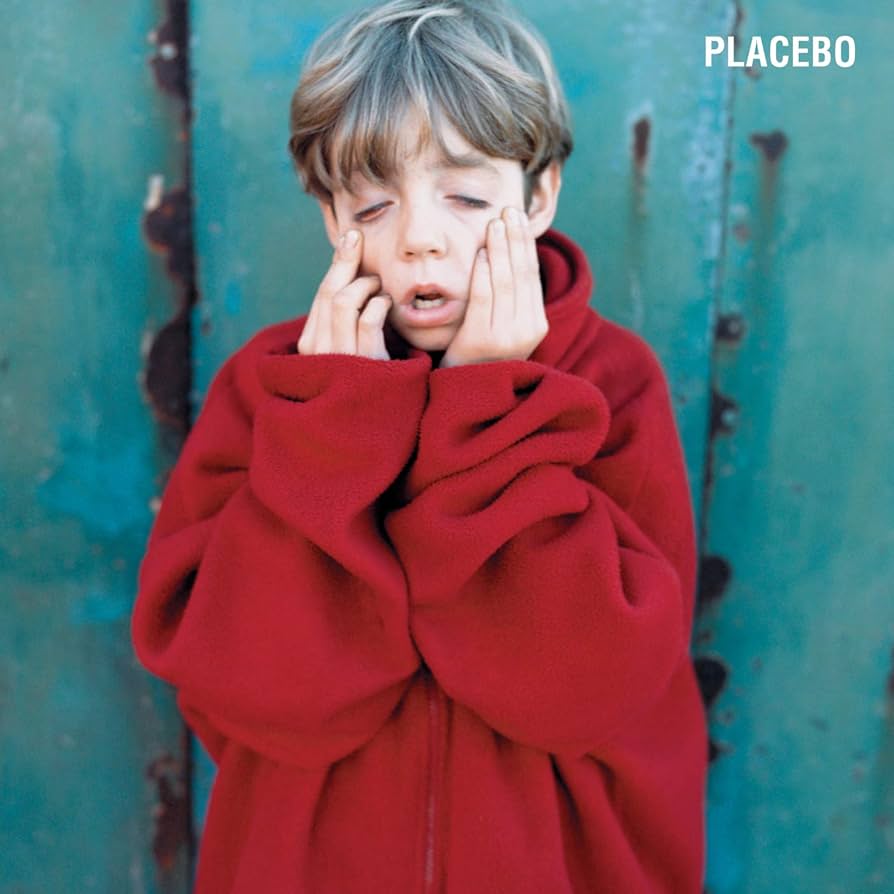
HEAVY MUSIC HISTORY: Placebo – Placebo
“They’re sexy and loud. Fragile and controversial,” boasts broadcaster Gary Crowley with a knowing smile, as he introduces grunge-tinted post-punkers PLACEBO backstage during their 1997 festival run. The so-called “queens of shock rock” felt like an outlier to the UK press, even more so to the manufactured “Cool Britannia” bubble of the Britpop music scene. For frontman Brian Molko and long-time co-conspirator Stefan Olsdal, the release of their debut self-titled album was only the beginning, creating the blueprint to produce music authentically, drunk on self-awareness and glittering with sexual ambiguity.
Devoid of labels and soaked in its own androgyne, the rise of PLACEBO felt intentional; music made for “the misfits, the outcasts, square pegs in round holes.” As Molko mentions in an interview with The Independent, the band itself identified with, appealing to “a great number of people who felt that there wasn’t necessarily a voice for them.” Much like DAVID BOWIE, who championed the band in his wildly experimental era, allowing them to join the THE SMASHING PUMPKINS and THE CURE at his 50th birthday party at Madison Square Garden, PLACEBO would reach an influentially cult status in the people they connected with musically.
Later on, the band would go on to be named by Gerard Way as one of his favourite artists, sharing several bills with the band. STATIC DRESS frontman Olli Appleyard would be posing for the cover of Rock Sound in fishnets and stilettos like the Nancy Boy music video, lying in a bath. The uncompromising rawness of their early sound can be felt in early WOLF ALICE and THE HORRORS. The rebellious roots would centre it in the raw and explorative sound of that all-important first record.
Whilst Belgian-born Brian Molko and Swedish Olsdal both attended a school in Luxembourg, never meeting during their time there, they met by chance at South Kensington tube station. Despite neither of them being from the UK, they bonded as musicians and went all in for the British music scene, starting lo-fi-inspired outfit ASHTRAY HEART. Gaining drummer Robert Schultzberg with the band’s evolution, they would later rename the band PLACEBO, due to its Latin meaning, ‘I shall please’. Placebo – the record – was released in June 1996.
Gaining a cult following through their uncompromising presence, their 1996 self-titled record would become a manifesto for creating dangerously and close to the bone. Placebo – the record – spoke to a damaged generation about hedonism and freedom of sexuality, outside of where it was fashionable to do so. The success of the band seemed to be rooted in the release of their single Nancy Boy, which pushed the record from a non-charting spot at the LP’s release to re-entering number five. In May of the next year, Placebo would go gold.
Nancy Boy was reactionary to SUEDE frontman Brett Anderson’s coo to the UK press that he was “a bisexual man who’d never had a homosexual experience.” As an openly bisexual man who had his fair share of homosexual experiences, the track revelled in creating a thrilling sexual high. Molko’s retort trailed bodily fluids and reclaimed queer stereotypes, years before modern genderqueer terms entered the public vocabulary.
Whether to shock, flirt or get acquainted with the band, Molko made this the band’s core identity, with lipstick-smattered sets that embraced androgyne. It was pleasing to him for people to come to his shows, where he sounded “like a girl” and met with a vocalist called Brian. Elsewhere on the record, this sexual promiscuity laced itself around the fragile loss of innocence in Bruise Pristine, the first song released by the band, and the lewd connotations of Swallow, inspired by an acid trip the band had.
The record as a whole spoke to an under-represented generation, brought up in the arse-end of a twenty-year conservative government, and fed on the choose life mentality popularised by the controversial Trainspotting released in the same year. The lonely, introspective feelings felt by PLACEBO are amplified in tracks like Hang On To Your IQ, and complex desire is explored freely and fully within the course of the record’s fifty-minute runtime. Femininity, loss of youth, and power imbalances seem to cauterise the band’s lucid experiences in Nancy Boy and express a much darker reality that the band would continue to explore in their later discography.
Placebo was the record that made the band, making the three-piece rockstars, and the band certainly have their stories to prove it. Even as Schultzberg was replaced mid-tour cycle by Steve Hewett, the band rose to acclaim, playing Glastonbury the next year and winning the Best British Breakthrough Act at the Kerrang! Awards.
For a record completely written in a council flat in Deptford, PLACEBO made heavy music history as one of the underdog bands that confronted the brash consumerism of the nineties. Much-loved by their audience, the band has provided mixed comments about the record over the years. Their “director’s cut” definitive thirty-year anniversary of the record comes out in June, with re-recorded and embellished versions of all ten tracks, alongside a European tour. The band reflect on this on their website, letting it be known that the important discussions about identity are immovable and ever-present. “Discussions around identity, gender expression and individuality are more visible – and often more contested – than ever. Against this backdrop, the origins of PLACEBO’s debut feel strikingly relevant again.”
Placebo was originally released on June 17th, 1996 via Virgin Records.
Like PLACEBO on Facebook.